View Case Study
Santa Clara Valley Transportation Authority (VTA)
Achieving the Decades-Long Vision of a Complete Transit Loop Around the San Francisco Bay
View Case Study
Decades Acquiring Property for Critical Public Infrastructure Projects Throughout California
Since 1986, Meyers Nave has acquired property on behalf of state, regional, and local public entities for a wide array of public uses, including state highway projects; regional airport projects; regional rail projects (commuter, heavy, and light rail); regional and local bus transit facilities; regional reservoir and water pipeline projects; regional and local flood control projects; regional and local sports arenas and facilities; local transit-oriented development projects; local street and roadway projects; local grade-separation projects; local redevelopment and affordable housing projects; local parks; local hospital expansion projects; local university and school facilities; local fire stations and police stations; local conference centers; and local libraries.
We have extensive experience representing public entities in both “single-parcel” acquisitions and “multi-parcel” acquisitions (where a public entity needs to acquire property interests from numerous separate parcels for a public project). We routinely work with our public entity clients’ legal counsel, project management teams, and expert consultants (appraisers, engineers, environmental consultants, land use consultants, right-of-way/relocation consultants, etc.) to coordinate on all legal and practical considerations arising out of large, multi-parcel acquisitions.
We have acquired a diverse range of property interests needed by public entities for public projects, including fee interests for “full takes” and “part takes”; leased fee interests and leasehold interests; permanent surface easements (both exclusive and non-exclusive); permanent subsurface easements (e.g., subway tunnel easements and subsurface pipeline easements); permanent aerial easements; and temporary construction easements (whether short-term or long-term).
We have acquired property interests from all types of properties, including urban, semi-urban, rural, agricultural, recreation/open space, and environmentally sensitive properties. This includes improved properties (improved with buildings and related improvements for industrial/warehouse/R&D, commercial/retail/office, and residential uses); properties with under-utilized improvements that do not contribute to the value of the land and do not reflect the current highest and best use of the property; crop-producing properties; properties with mineral rights; raw land; unimproved properties; open space and park property; special use properties; and public property (property owned by another public entity, public utility, and/or investor-owned utility).
We have a vast and proven track record of working closely and collaboratively with our public entity clients to meet their project timing and construction goals. This includes significant planning and coordination to prepare and file motions for prejudgment possession, which request an order from the court that our public entity clients may take prejudgment possession of the property to commence construction or related activities prior to resolution of the issue of “just compensation” with the landowner, tenant, or business owner. We have deep knowledge of, and experience with, the Eminent Domain Law’s statutory standards, procedures, and timing for obtaining orders for prejudgment possession.
Of course, the just compensation to be paid to a landowner, tenant, and/or business owner is a significant part of an eminent domain case. We commonly address complex valuation methodologies used by supporting and opposing expert appraisers. This includes valuation disputes relating to full takes; part takes (and assessing severance damages and benefits); leased fee and leasehold valuation and allocation; improvements pertaining to the realty (“IPTR”); easement valuation; business goodwill and relocation benefits; claims for precondemnation damages; and more. We have an in-depth understanding of the plethora of valuation disputes that can arise, and we have practical and efficient strategies for resolving them.
It should always be the goal of a public entity to successfully negotiate a just and fair settlement with a landowner, tenant, and/or business owner. But there are occasions when the parties are not able to agree on value. In such cases, the issue of just compensation is resolved in court by a jury. Meyers Nave has an outstanding record of successful eminent domain jury trials on behalf of public entities.
We are experts in both eminent domain (where public entities acquire property for a public use and pay just compensation) and inverse condemnation (where landowners claim that public entities have taken or damaged their property but have not acknowledged their obligation to pay just compensation). Inverse condemnation may include a claim for physical damage to property. It may also include a claim that a government regulation has decreased the value of property (i.e., an alleged regulatory taking). And in eminent domain cases, it may include a claim that a public entity’s precondemnation delay or conduct has decreased the value of property. We have extensive experience in all types of inverse condemnation claims against public entities.
Property owners in California have experienced property damage with increased frequency in the last few years as a result of wildfires, heavy rains and flooding, and/or landslides. As a result, various public entities in California are at risk of being sued for inverse condemnation based upon allegations that public infrastructure has failed to prevent such damage. Meyers Nave’s Eminent Domain & Inverse Condemnation and Trial & Litigation teams represent many public entities in California in defending against such claims.
For a list of trials, see David Skinner’s bio.
Eminent domain counsel to the City of Sacramento on the $535 million Golden 1 Center, with the NBA holding an option to relocate the Kings if a new arena was not built quickly enough. Following CEQA compliance, when the final parcel turned into a high-profile eminent domain fight (the former Downtown Plaza Mall including a former Macy’s department store building) we commenced eminent domain proceedings. Critically, we also filed a motion for prejudgment possession in order to meet the NBA’s timeline. The court overruled every right-to-take objections raised by the landowner, held that the City’s eminent domain action was legally supported, and granted the City’s order. Thereafter, the case settled and Golden 1 Center opened on time for the new NBA season.
On the $4 billion Pure Water program, SDG&E claimed roughly $100 million to relocate gas and electric facilities in the path of new pipelines and won summary judgment in the trial court. Retained for the appeal, we persuaded the Fourth District to reverse in full and enter judgment for the City in 2024. On State Route 56, over five years we acquired portions of 18 multi-acre properties for the 5.5-mile middle segment through a series of jury trials on highest and best use, severance damages, and project benefits, producing three published decisions, including City of San Diego v. Barratt American (2005) 128 Cal.App.4th 917.
Eminent domain counsel to Metro for more than a decade on its high-profile, high-value acquisitions, including the $9.5 billion D Line subway extension and the $2 billion K Line to LAX. The work includes the subway tunnel rights beneath Beverly Hills High School, where the owner’s $74 million claim was answered with a $1.046 million jury award, a second tunnel easement trial that answered a $25.6 million demand with $235,000, and a K Line parking facility purchase that saved Metro more than $20 million.
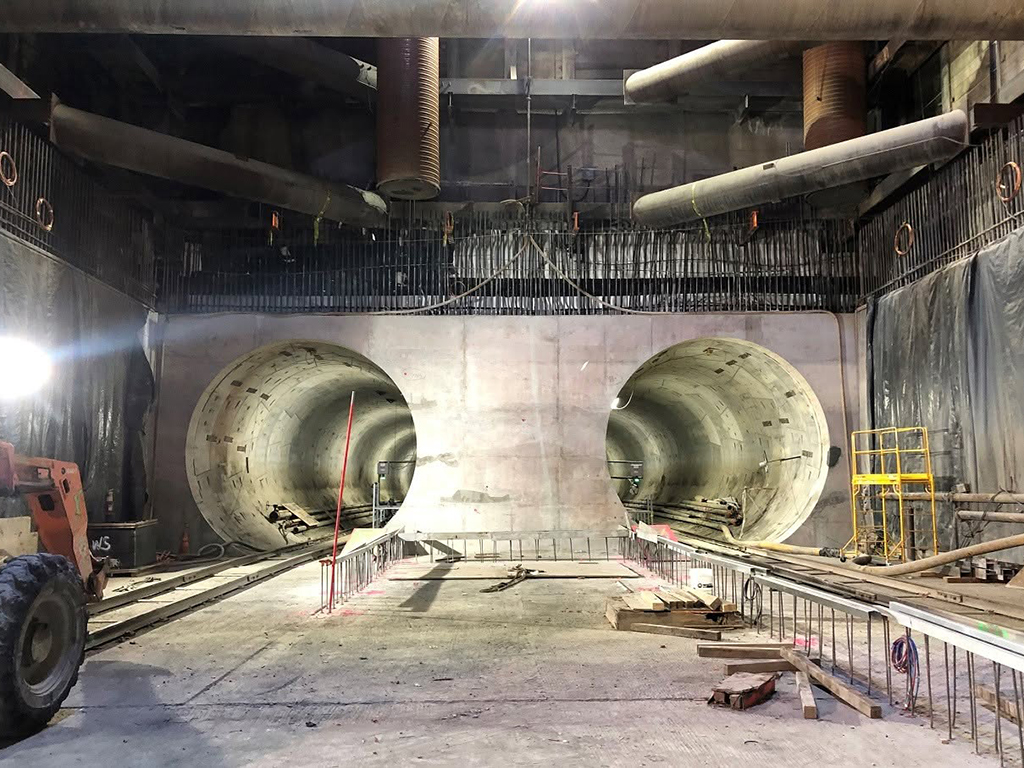
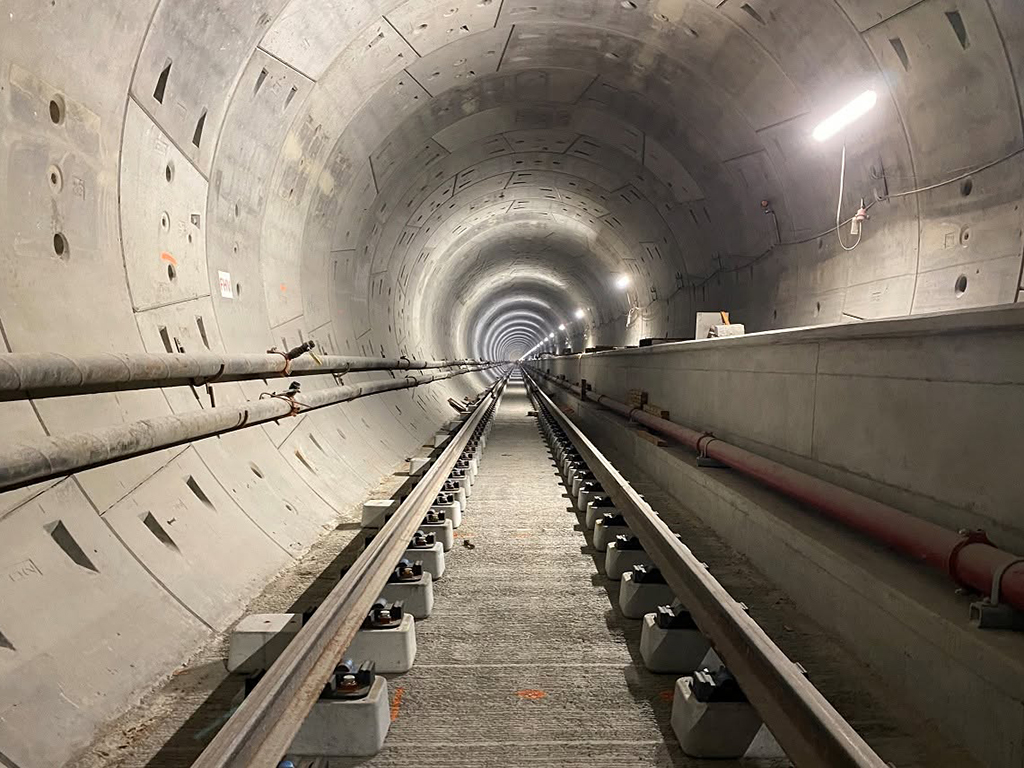
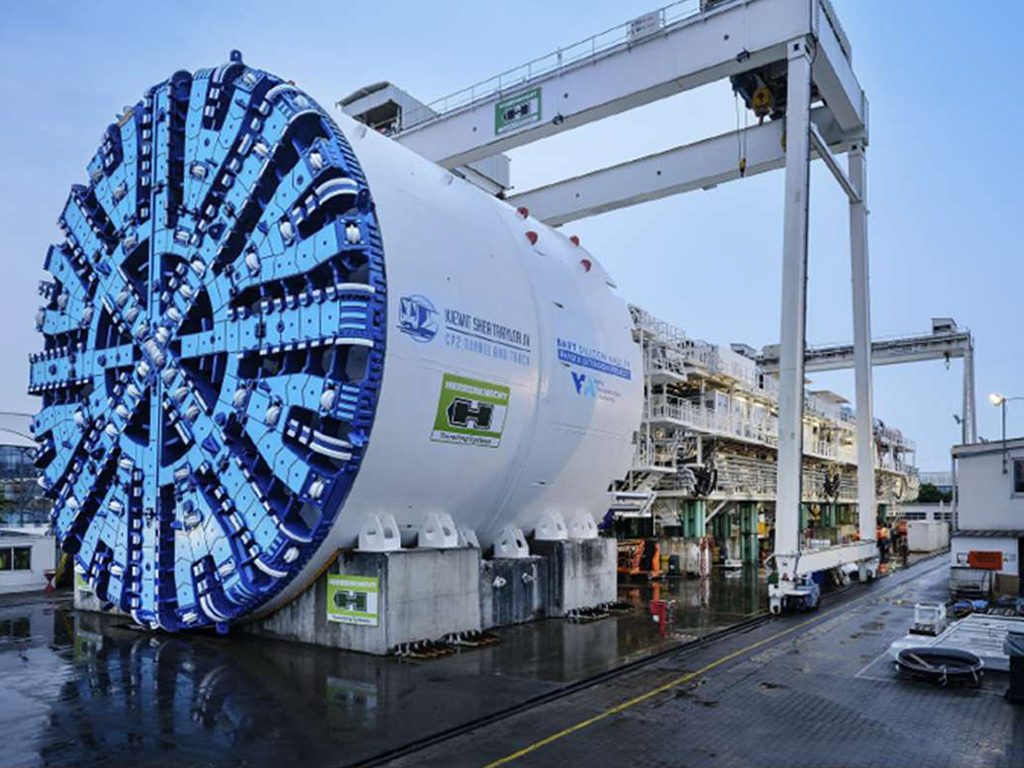
Decades of eminent domain counsel to VTA, from the BART extension from Fremont to San Jose to the $14.5 billion BART Silicon Valley extension, the largest public project in Santa Clara County history and the completion of a decades-long vision of a rail loop encircling San Francisco Bay. The work includes full takes of multi-acre industrial parks, a rare writ of assistance enforcing prejudgment possession, and a 2026 jury verdict awarding $0 on a $21 million goodwill claim. Earlier, on the Vasona light rail line, jury verdicts landed exactly on VTA’s appraised values.
Eminent domain counsel for decades to MTS on critical projects, including its $390 million Clean Transit Advancement Campus, the anchor of its transition to a zero-emission bus fleet. There we secured the key properties, resolved valuation disputes through negotiation and litigation, and defended MTS in the eminent domain litigation arising from Mid-Coast Trolley utility relocation. Current work includes the acquisition of an approximately 11-acre developed site with business tenants for a new bus maintenance facility.
The goodwill rule every condemnor cites. Acquired the leasehold interests UCLA’s Santa Monica hospital expansion needed, producing the first published decision holding that a business owner must try to relocate before claiming loss of goodwill (Regents of the University of California v. Sheily (2004) 122 Cal.App.4th 824). Condemnors and owners have argued from that rule ever since.
Numerous acquisitions for an 11-mile water pipeline extension, with pipeline easement and temporary construction easement valuation disputes tried to juries. In one, the owner’s appraiser claimed up to $2.35 million in temporary severance damages and the jury found none. In another, the owner’s appraisal of $1.68 million for a well and treatment plant site produced a verdict of $67,500.
Handled every part of the right-of-way process for the Highway 25 Bypass, where 44 acquisitions were required. Sixteen cases were filed; all but two settled before trial. In one, the tenant recovered nothing for loss of goodwill. In the other, the owner recovered $1,000 above the Council’s appraisal and hundreds of thousands below the owner’s own appraisal, and the Court of Appeal affirmed.
In Speights v. City of Oceanside, a developer claimed more than $12 million, alleging that the City’s stormwater drainage requirements amounted to a physical taking, a regulatory taking, and unreasonable precondemnation conduct. The City won summary judgment, affirmed on appeal in 2009.
Lead counsel to the County of Los Angeles in a complex series of cases involving the landslides along the Palos Verdes coastline. Pending.
Related Case Studies
Santa Clara Valley Transportation Authority (VTA)
Los Angeles County Metropolitan Transportation Authority (Metro)
Related Resources

Jury Sides with VTA in Meyers Nave Eminent Domain Trial

Meyers Nave Secures Appellate Victory for City of San Diego in Utility Relocation Dispute
Meyers Nave’s Eminent Domain Team Continues its Successful Partnership With LA Metro on the Westside Purple Line Subway Extension Project

Meyers Nave Named Tier 1 Among “Best Law Firms” in Oakland for Eminent Domain & Condemnation Law and Natural Resources Law by U.S. News – Best Lawyers® in 2024


Meyers Nave Ranked as a “Best Law Firm” in Eight Categories by the 2023 Edition of U.S. News – Best Lawyers®
Eminent Domain Team Partners with L.A. County Metro to Acquire Property from the Beverly Hills Unified School District for the Westside Purple Line Subway Extension Project
Six Meyers Nave Attorneys Recognized as “Best Lawyers in America”