2027 Lawdragon 500 Leading Litigators in America

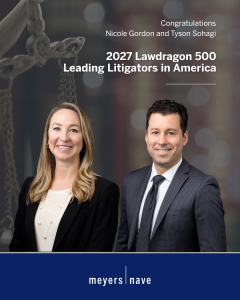
Congratulations to Nicole Hoeksma Gordon and Tyson Sohagi on being named to the 2027 Lawdragon 500 Leading Litigators in America.

Honorees are selected by Lawdragon’s editorial team through a combination of submissions, research into the lawyers behind notable cases, and review by a board of peers. This year’s list spans commercial litigation, financial and securities matters, white collar and investigations, product liability, mass torts, class actions, appellate, and antitrust.

SDBJ 2026 Women of Influence in Law

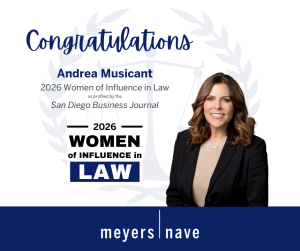
Congratulations to Andrea Musicant, named one of the San Diego Business Journal’s 50 Women of Influence in Law for 2026!

This recognition honors 50 deserving leaders representing the breadth of San Diego’s legal community, selected from a competitive nomination pool. We’re proud to celebrate Andrea’s well-earned place on this list — a true reflection of her growth and impact in the legal profession.

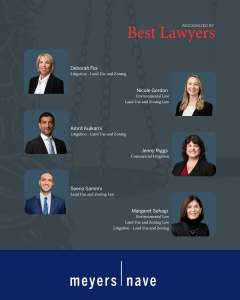
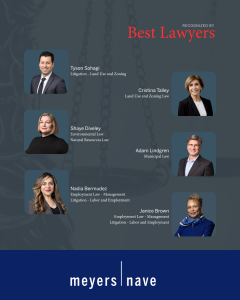
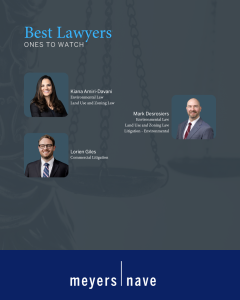
Meyers Nave Attorneys Named to the 2027 Edition of The Best Lawyers in America and Best Lawyers: Ones to Watch in America

We are proud to announce that 15 Meyers Nave attorneys have been recognized in the 2027 Edition of The Best Lawyers in America® and Best Lawyers: Ones to Watch in America™ — along with a Top-Listed Metro Award for our Los Angeles land use litigation team.

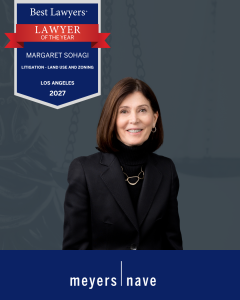
A special congratulations to Principal Margaret Sohagi, once again named “Lawyer of the Year” for Litigation – Land Use and Zoning in Los Angeles. This is her third time earning the honor, following previous recognitions in 2022 and 2015 — a true testament to her decades of leadership in land use and environmental law.

The Best Lawyers in America (2027 Edition)

Los Angeles, CA

Ones to Watch:

Oakland, CA

Sacramento, CA

San Diego, CA

  • Nadia Bermudez – Employment Law – Management; Litigation – Labor and Employment
  • Janice P. Brown – Employment Law – Management; Litigation – Labor and Employment

Our Los Angeles office was also named Top-Listed in Litigation – Land Use and Zoning, with four of our attorneys recognized in that practice area alone.

Congratulations to all our honorees. This recognition reflects the dedication, skill, and trust our clients place in our attorneys every day. We’re proud to work among the best!

#MeyersNave #BestLawyers #LawyerOfTheYear #LandUseLaw #EnvironmentalLaw #LegalExcellence


Failure to Comply with Claims Presentation Requirement Cannot be Cured After Lawsuit is Served on a Public Entity

In a published opinion issued on June 2, 2026, the Second Appellate District affirmed the importance of the Government Claims Act’s claim presentation requirement. The Court held that a plaintiff’s failure to present the claim to the public entity before filing and serving a lawsuit was a fatal defect that could not be cured.

Harland v. City of West HollywoodB343375, involved a slip and fall plaintiff who mailed a government claim to the City and, just two days later, filed a lawsuit against the City. Fifteen days after the City received the claim, and before the City denied the claim, the plaintiff served the lawsuit on the City. Recognizing that the suit was filed prematurely, the plaintiff tried to cure the defect after the claim had been denied by first amending the complaint, and then dismissing the complaint to re-file as a new case.

The Court of Appeal held that the plaintiff’s failure to comply with the claims presentation requirement before initially filing and serving the complaint on the City was fatal to her claim, and could not be cured. Not only did the Court lay out a bright line rule, but it provided powerful language on the purpose and importance of the claims presentation requirement: claim presentation “ensures public entities get sufficient information to investigate claims without the expense of litigation” and that function is defeated when a plaintiff prematurely files suit. Harland reinforces the importance of public entities weighing any claim presentation defense as part of an initial litigation evaluation. As the Court succinctly put it, “[t]ime spent on litigation is gone forever and can never be recovered.”

As litigation costs continue to rise, Harland gives public entities and their counsel a clear mandate — evaluate claim presentation compliance at the outset of every tort matter, because it can be the difference between quick resolution and protracted litigation.

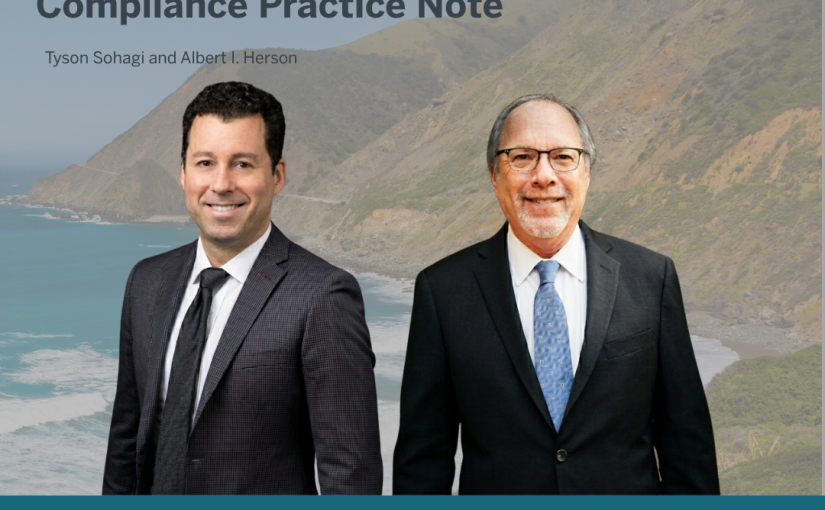
2026 CEQA LexisNexis® Practical Guidance Practice Note

Tyson Sohagi and Albert I. Herson from Meyers Nave are proud to again author the LexisNexis® Practical Guidance practice note on California’s broadest environmental law, the California Environmental Quality Act (CEQA).

Key sections include:

  • Sources of CEQA Requirements
  • Players in the CEQA Process
  • Overview and Timing of the CEQA Process
  • Practical Considerations before Starting the CEQA Process
  • The Initial Study and Negative Declaration
  • Preparing the Environmental Impact Report (EIR)
  • EIR Contents
  • Integrating CEQA with Other Environmental Laws
  • Judicial Review and more.

Clients and other interested parties can request a pdf via email at: marketingdept@meyersnave.com or LexisNexis® account holders can view a summary and download here: California Environmental Quality Act Compliance (summary)


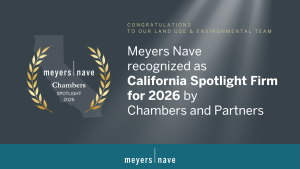
Meyers Nave Ranked in the Chambers Spotlight California 2026 Guide

We are proud to share that Meyers Nave has been ranked in the Chambers Spotlight California 2026 Guide for our work in Environment and Real Estate: Zoning/Land Use (Los Angeles). This recognition reflects the strength of our Land Use and Environmental team of lawyers and our firm’s commitment to delivering results across California.

The guide recognizes more than 300 small and mid-sized firms across California for client service, market reputation, and depth of experience. Chambers also highlighted increasing demand for legal counsel in areas including real estate, privacy, data security, and technology-driven regulatory matters.

Chambers and Partners is a respected legal research and publishing organization that ranks law firms and individual lawyers worldwide based on client feedback, legal expertise, and market performance across various practice areas and regions.

For more information, visit https://chambers.com/law-firm/meyers-nave-usa-spotlight-120:172530

#MeyersNave #ChambersSpotlight #CaliforniaLaw #RealEstateLaw #EnvironmentalLaw

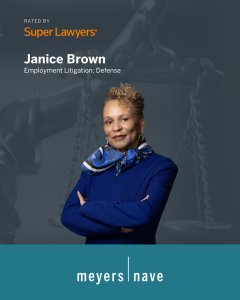
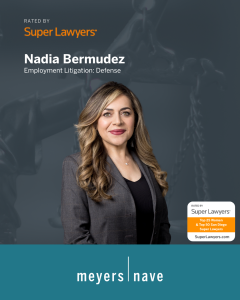
Janice Brown Marks 20 Years as a San Diego Super Lawyer as Nadia Bermudez Earns Top Honors in the 20th Anniversary Edition

Our firm is proud to announce that Janice Brown and Nadia Bermudez have been recognized on the 2026 San Diego Super Lawyers list, featured in the publication’s 20th Anniversary edition.

Janice Brown is featured on the cover and profiled in a 20th Anniversary article reflecting on how the legal landscape has evolved over the past two decades, marking her twentieth consecutive year named to Super Lawyers, an uncommon distinction that underscores the consistency and depth of her practice.

Nadia Bermudez’s selection to the Top 50: 2026 San Diego Super Lawyers and the Top 25: 2026 Women San Diego Super Lawyers further highlights the firm’s bench of respected attorneys who deliver results across complex matters.

Congratulations to Janice and Nadia!

Read the featured article beginning on page 18: https://lnkd.in/g9RD62De

###

Super Lawyers, a Thomson Reuters rating service that selects no more than the top 5 percent of lawyers in California based on peer recognition, professional achievement, and independent research.

Being named to these lists reflects sustained excellence and deep expertise in complex legal fields from constitutional practice to environmental litigation and policy. These recognitions underscore the firm’s strength in environmental and public-sector work across California and the firm’s commitment to delivering rigorous advocacy and sophisticated counsel to clients throughout the state.

The Super Lawyers selection process includes peer nominations, independent research, and peer evaluations, ensuring that honorees represent the highest level of professional respect and accomplishment.


Neighbor Disputes in High-Value Commercial and Residential Real Estate

Whether your neighbors are adjacent businesses in a commercial complex, or the family who lives on the other side of the wall in your backyard, neighbor disputes can easily turn into the most stressful and cumbersome aspect of one’s life. Getting early guidance from an experienced attorney familiar with land use and real estate disputes may avoid some of the worst outcomes.

For those with investments in high-end residential, commercial, industrial, or mixed-use property, conflicts with adjacent owners can stall projects, impair value, and divert attention from the original goals. What begins as a simple boundary issue, construction problem, or access concern can quickly escalate into regulatory complaints, nuisance claims, or even litigation.

Land-Use and Real Property Disputes Have Commonalities

In California, disputes surrounding real property and land-use tend to cluster around a few recurring issues:

  • Nuisance allegations: Noise, traffic, lighting, construction impacts, or disruptive business operations.
  • Easements, CC&Rs, and recorded restrictions: Often overlooked limitations that constrain use, expansion, or operations.
  • Encroachments: Walls, fences, retaining structures, or unpermitted improvements tied to assumed property lines.
  • Trees and landscaping: Damage claims, view disputes, and statutory exposure.
  • Access issues: Shared driveways, ingress and egress, or modified easements.
  • New development opposition: Neighbor challenges aimed at delay or leverage.

Why Early Positioning Matters

Often, it is the first pitch that sets the stage for the entire game. An initial combative meeting or aggressive letter from counsel can derail any hope for amicable resolution of these issues, as such encounters can lead to emotions overtaking any subsequent rational positioning and decision making. Attorneys are often brought into the picture too late – when the situation has gotten so bad that there is no other choice. However, it is early legal positioning that limits legal/financial exposure and preserves optionality.

Disputes escalate fastest when assumptions replace thorough analysis, or when early responses are handled informally without a clear litigation strategy in mind. For example, an attorney can provide an early objective analysis of the legal issues, and what each party is likely to achieve if the dispute ends up in litigation. Having this analysis in hand (including potentially including third party experts such as surveyors, contractors, or experts) before dealing with the other side will inform the strategy for those initial negotiations.

When Disputes Escalate

Not every dispute can be resolved informally. Some are emotional. Others are strategic and tied to timelines, regulatory requirements, or enforceable restrictions. In either case, disciplined communication and a defensible strategy help preserve credibility, leverage, and long-term value.

Commercial and residential neighbor disputes are common, but they are manageable. A thoughtful early approach can limit disruption, preserve leverage, and keep objectives in focus.

Meyers Nave Attorneys Named to 2026 Southern California Super Lawyers and Rising Stars Lists

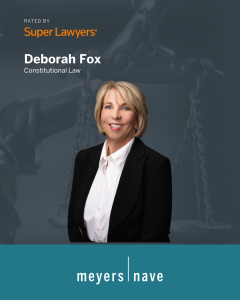
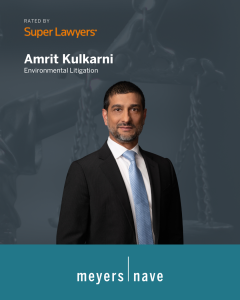
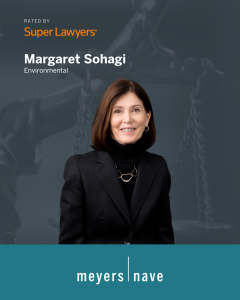
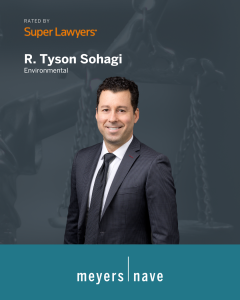
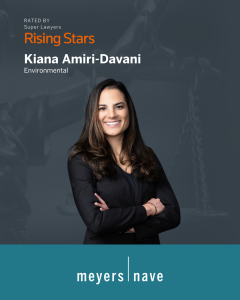
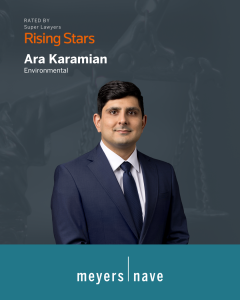
Our firm is proud to announce that six attorneys have been recognized on the 2026 Southern California Super Lawyers and Southern California Rising Stars lists by Super Lawyers, a Thomson Reuters rating service that selects no more than the top 5 percent of lawyers in California based on peer recognition, professional achievement, and independent research.

2026 Recognized Attorneys
Deborah Fox — Constitutional Law
Amrit Kulkarni — Environmental Litigation
Margaret Sohagi — Environmental
Tyson Sohagi — Environmental
Kiana Amiri-Davani — Environmental
Ara Karamian – Environmental

Being named to these lists reflects sustained excellence and deep expertise in complex legal fields from constitutional practice to environmental litigation and policy. These recognitions underscore the firm’s strength in delivering rigorous advocacy and sophisticated counsel for private, non-profit, and government agencies throughout the state of California.

The Super Lawyers selection process includes peer nominations, independent research, and peer evaluations, ensuring that honorees represent the highest level of professional respect and accomplishment.

Congratulations to Deborah, Amrit, Margaret, Tyson, Kiana, and Ara on this distinguished recognition.

Proposed New Federal Rule Regarding AI-Generated Evidence

Evidence generated by artificial intelligence (“AI”) is making its way into courtrooms. As a result, the U.S. Judicial Conference’s Advisory Committee has proposed a new rule “to regulate the admissibility of machine evidence that is introduced without the testimony of any expert.” The proposed rule marks an important effort to address concerns raised by the use of AI in courts of law and has generated extensive discussion and comments from judges, lawyers, and other interested parties across the country.

As proposed by the Advisory Committee, Federal Rule of Evidence 707 (“Proposed Rule 707”) would subject “machine-generated evidence” to the same admissibility standard as expert testimony. The proposed rule reads:

When machine-generated evidence is offered without an expert witness and would be subject to Rule 702 if testified to by a witness, the court may admit the evidence only if it satisfies the requirements of Rule 702 (a)-(d). This rule does not apply to the output of simple scientific instruments.

The Advisory Committee released Proposed Rule 707 for public comment in August 2025, and the public comment period closed this week on February 16, 2026.

Select issues raised by commenters in response to Proposed Rule 707 include:

  • The phrase “machine-generated evidence” is undefined. While the Committee Notes illustrate that this rule is intended to address AI-generated evidence, the absence of a definition of those terms creates vagueness and ambiguity, and the scope of evidence targeted by the rule is unclear.
  • The procedure for admitting machine-generated evidence using Rule 702 standards is uncertain because there might not be a qualified expert to examine regarding the proffered evidence. Thus, evidence offered under Proposed Rule 707 could spur more disputes and higher litigation costs than traditional expert testimony.
  • Proposed Rule 707 may be premature at this time. AI technology and the public’s understanding of such technology continues to evolve rapidly, and it is unclear whether this rule creates the flexible framework needed to provide guardrails for such technology efficiently.

Notably, Proposed Rule 707 only attempts to address concerns with admissibility of evidence a party acknowledges to be AI-generated, and does not begin to address problems with unacknowledged AI-generated evidence, like deepfakes. Amendments and additions to Federal Rule of Evidence 901 have been suggested to deal with such authentication issues, but the scheme the Advisory Committee will choose to deal with the myriad problems generated by AI in the courtroom remains to be seen.

The Advisory Committee will review and process the public comments on Proposed Rule 707 and provide a final report on the matter in June 2026.