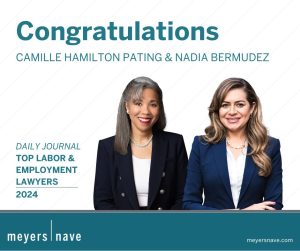
Congratulations to our attorneys, Camille Hamilton Pating and Nadia Bermudez, for being named to the Daily Journal’s annual list of California’s Top Labor and Employment Lawyers! Your dedication to litigation, PAGA matters, unlawful terminations, and workplace investigations sets a high standard in our field. We are proud to have such a talented and committed team delivering excellent legal service to our clients.
Meyers Nave is pleased to announce that five of our attorneys have been recognized in the 2024 list of Northern California Super Lawyers and Northern California Rising Stars. This acknowledgment reflects their exceptional legal skills and professional achievements, highlighting the excellence across various Meyers Nave practice areas. Only up to five percent of the lawyers in California are named to the Super Lawyers list and up to 2.5 percent are named to the Rising Stars list.
Overview
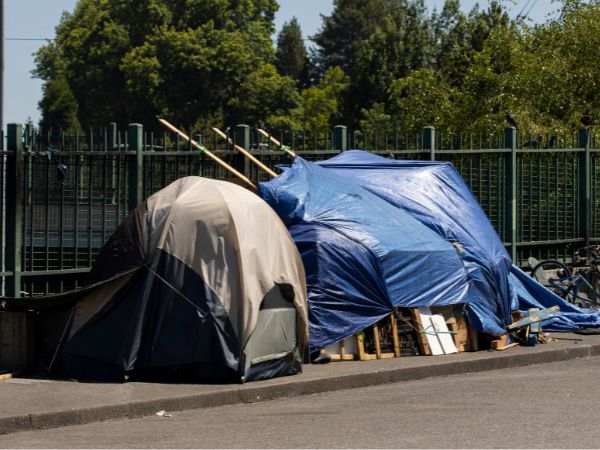
In the recent ruling in the City of Grants Pass v. Johnson et al., Case No. 23-175, decided on June 28, 2024, the United States Supreme Court reversed the Ninth Circuit’s earlier decision. This alters the legal landscape in California and other Western states within the Ninth Circuit. The Court concluded that a broadly applicable ordinance banning camping, sleeping, and overnight parking in public areas does not violate the Eighth Amendment’s prohibition on cruel and unusual punishment.
Case Specifics: Anti-Camping Ordinances in Grants Pass, Oregon The case specifically evaluated anti-camping ordinances in Grants Pass, Oregon, which prohibited camping or overnight parking on public property. Initial violations led to fines, with repeat offenders facing potential jail time. The Ninth Circuit had previously ruled that these ordinances violated the Eighth Amendment, because the homeless population exceeded available shelter beds. The Ninth Circuit thus reasoned that enforcement was a punishment for being homeless.
Supreme Court’s Ruling In a 6-3 decision, the Supreme Court disagreed with and reversed the Ninth Circuit. The Court noted the extensive interest from numerous states, cities, and counties across the Ninth Circuit, as highlighted in amicus briefs. The Court acknowledged these briefs which argued that anti-camping laws are tools to encourage homeless individuals to accept services and maintain safe public spaces.
Legal Reasoning The Supreme Court ruled that the Eighth Amendment’s prohibition on cruel and unusual punishment pertains to the method of punishment post-conviction, not to the criminalization of specific behaviors. The Supreme Court’s majority opinion also reasoned that camping bans target actions, not the status of homelessness.
Impact on Cities & Policy Implications The Supreme Court’s ruling allows cities to consider camping bans as tools to address health and safety issues associated with homeless encampments in public spaces. Cities can evaluate potential anti-camping ordinances as part of their strategies to tackle the complicated issues and challenges regarding homelessness in their respective jurisdictions.
Further Considerations Cities should remain mindful that the Supreme Court’s ruling in City of Grants Pass still allows for constitutional challenges to camping bans on the grounds that they violate the due process clause or excessive fines clause. Moreover, where camping bans allow for the impoundment of tents, blankets or other personal effects, cities should have rules in place regarding notice, collection, and storage as the impoundment of an unhoused individual’s personal effects is subject to the Fourth Amendment’s prohibition against unreasonable search and seizure.
Starting July 1, 2024, all employers in California with more than 10 employees are now required to implement comprehensive workplace violence policies.
Under the new Labor Code Section 6401.9, employers must have a Workplace Violence Prevention Plan (WVPP) which includes the following components:
Hazard Identification and Evaluation: Procedures to identify and assess potential workplace violence hazards.
Hazard Correction: Strategies to address and correct identified hazards.
Emergency Response Protocols: Clear protocols for responding to incidents of workplace violence.
Training Provisions: Mandatory training for employees on recognizing and mitigating workplace violence.
Failure to comply with this regulation could result in penalties and increased liability for incidents of workplace violence.
Next Steps
Develop Your Program: Start developing your workplace violence prevention program now to ensure compliance ASAP.
Implement Training: Ensure that all employees receive the necessary training on workplace violence prevention.
Seek Professional Assistance: Contact Meyers Nave for expert advice and assistance in creating a robust WVPP.
Resources and Guidance
Cal/OSHA Guidance: Cal/OSHA provides additional guidance and resources on the WVPP including this fact sheet for employers, located here.
By staying proactive and compliant, you can create a safer workplace and protect your business from potential liabilities.
As part of our commitment to keeping our clients informed and prepared, we wish to highlight four significant developments in employment law that are particularly relevant for California employers. Understanding and adapting to these updates is crucial for maintaining compliance and protecting your business interests. Here’s what you need to know:
1. Changes to the Private Attorneys General Act (PAGA):
Amendment Details: On June 18, 2024, Governor Newsom joined with California legislative leaders and business and labor groups to reach an agreement to reform PAGA. The deal came about in response to voter initiative that qualified for the November ballot and which would have repealed PAGA. Once legislation reflecting the new agreement is passed and signed by the Governor, supporters of the PAGA ballot initiative have agreed to withdraw the measure.
Good News and Bad News: The deal brings some good news for employers, including: (a) an improved right-to-cure process and a cap on penalties for employers who proactively ensure wage/hour compliance and/or who act quickly to rectify problems after receiving a PAGA notice; (b) limitations on the scope of claims presented at trial, and (c) a requirement that employees must personally experience alleged violations to bring a claim. On the other hand, the PAGA reforms fall short in that there will still be no limitation on attorneys’ fees for plaintiffs’ attorneys, which is the primary driver of PAGA claims. Thus PAGA claims are likely to continue to be filed.
Next Steps: Review your wage and hour compliance strategies with our attorneys to minimize exposure to PAGA claims. Stay tuned as more details of the PAGA reform deal become available.
2. Non-Competes:
New Restrictions: While the federal landscape has shifted against non-compete clauses, California continues to enforce limitations on the use of non-competes. Employers should be cautious in restricting, or attempting to restrict, employees’ rights to work in their industry beyond their term of employment.
Legal Implications: Any non-compete clause deemed overly restrictive may be considered void. It’s crucial to review your current contracts with legal counsel to ensure they meet state guidelines. Under California law, if an employer tries to enforce an illegal non-compete, an employee may pursue injunctive relief and can recover attorney’s fees. (Cal. Bus. & Prof. Code § 16600.5)
Action Steps: Consult with our team to revise existing agreements and draft compliant policies that protect your proprietary information without overstepping legal bounds. Additionally, Cal. Bus. & Prof. Code § 16600.1 required that employers provide written notice voiding the restrictive covenant to any current or former employees employed after January 1, 2022 who were subject to a noncompete clause. If you missed the February 14, 2024 notice deadline, take steps now to provide the required notice.
3. Pregnancy Accommodation and Leave:
Expanded Rights: Recent amendments have broadened the scope of pregnancy-related protections, including accommodations and extended leave provisions. Federal regulations require employers to make reasonable accommodations to a worker’s known limitations related to pregnancy, childbirth, or related medical conditions, such as flexible breaks, flexible hours, changing equipment or workstations, and leave for healthcare appointments and/or recovery from childbirth or related pregnancy conditions. Additionally, California law requires that employers provide five (5) days of bereavement leave to employees who experience reproductive loss, including a failed adoption, failed surrogacy, miscarriage, stillbirth, or unsuccessful assisted reproduction. The new bereavement leave is unpaid but allows employees to use any accrued vacation, sick, or other leave as compensation.
Employer Requirements: Ensure your HR policies are updated to reflect these changes and that managers are trained on how to implement them effectively. Importantly, California law also requires that the employer maintain employee confidentiality relating to any use of reproductive loss leave.
Proactive Compliance: We recommend conducting an audit of your current practices with our guidance to avoid potential discrimination claims and penalties.
4. Workplace Violence Prevention Plan (WVPP):
Labor Code Section 6401.9: Outlines the elements of a workplace violence prevention plan, which include establishing procedures to identify and evaluate workplace violence hazards, procedures to correct workplace violence hazards, emergency response protocols, and training provisions,
July 1, 2024 Deadline: All California employers with 10 or more employees must implement a WVPP by July 1, 2024.
Cal/OSHA Guidance: Cal/OSHA provides guidance and resources on the WVPP including this fact sheet for employers, located here.
Action Steps: Develop and implement a violence prevention program in compliance with WVPP by the July 1 deadline.
As always, Meyers Nave is committed to partnering with you to navigate these changes. Our deep understanding of California law, combined with a proactive approach to client service, ensures that you can focus on your business with confidence that your legal matters are in expert hands.
For a detailed consultation on how these developments affect your specific circumstances, please contact us.
So-called “social noise”—i.e., noise created by human voices—is not an environmental impact required by the California Environmental Quality Act (“CEQA”) to be analyzed for residential projects, the California Supreme Court ruled on June 6, 2024, in Make UC a Good Neighbor v The Regents of the University of California.
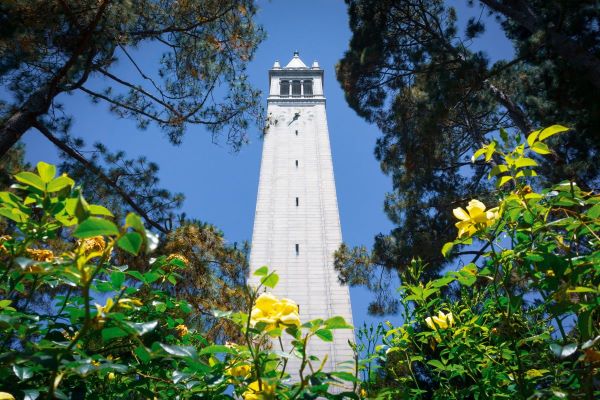
The unanimous ruling brought an end to a years-long challenge to the University of California’s (“UC”) proposed housing project on the highly controversial site known as People’s Park in Berkeley.
Recognizing the State’s widespread housing crisis, UC Berkeley identified construction of new housing for students and faculty as one of its goals in its latest planning document, the 2021 Long Range Development Plan (“2021 LRDP”).
In September 2021, the Regents certified an Environmental Impact Report (EIR) for the 2021 LRDP and the construction of two development projects, including what became to be known as the People’s Park project. The People’s Park project proposed adding 1,113 student beds, 1.7 acres of open landscape, and 125 affordable and supportive housing beds for lower-income or formerly homeless individuals not affiliated with UC.
A month later, petitioners brought a CEQA lawsuit, objecting to UC building housing on People’s Park. Petitioners challenged the EIR and the 2021 LRDP and People’s Park project approvals on the grounds, that among other things, UC failed to adequately assess social noise impacts and that the EIR did not consider alternative locations for the People’s Park project.
After the trial court denied the petition, petitioners appealed. The First District Court of Appeal, reversing the trial court, concluded the EIR failed to assess social noise impacts in residential neighborhoods and failed to consider alternative locations for the People’s Park project. The Supreme Court granted the UC’s petition for review. While case was pending at the Supreme Court, the Legislature proposed an amendment to CEQA—AB 1307—in response to the Court of Appeal’s decision. AB 1307 provided that “the effects of noise generated by project occupants and their guests on human beings is not a significant effect on the environment for residential projects for purposes of CEQA.” Governor Newsom signed AB 1307 into law in September 2023.
The Supreme Court overturned the Court of Appeal’s decision, holding that AB 1307 applies to both the People’s Park project and the 2021 LRDP. The Court took an expansive view of “residential projects” under AB 1307 to hold that the statute encompasses land use planning activities to the extent it concerns residential development. This confirmed AB 1307’s broad reach to prevent the need for analyzing social noise for a wide range of agency decisions affecting residential development.
AB 1307 also eliminated the requirement for UC to analyze alternative locations for the People Park’s project. Petitioners conceded, and the Supreme Court agreed, that AB 1307 mooted their alternatives argument.
This decision gives UC the greenlight to proceed with the much-needed housing project at People’s Park. It also reinforces that “no matter how important its original purpose, CEQA remains a legislative act, subject to legislative limitation and legislative amendment”—even in the middle of ongoing litigation.
At Meyers Nave, we prioritize assisting our clients in establishing and maintaining wage and hour policies that comply with legal standards. This includes implementing effective systems and processes to ensure all levels of the workforce are informed and practicing these policies. Unfortunately, we have observed a significant uptick in class action and Private Attorneys General Act (PAGA) lawsuit filings, particularly since the onset of the COVID-19 pandemic.
Last year, California experienced over 5,000 employment-related class-action filings, and the number of PAGA notices filed with the California Labor and Workforce Development Agency has increased annually.
Rising Litigation: Understanding the Causes Recent rulings from the California Supreme Court have been notably favorable to employee-plaintiffs, subsequently increasing employers’ exposure and liability:
Wage Designation: Meal and rest break premiums have been reclassified as “wages,” which has implications for wage statements and final pay penalties.
Timekeeping Requirements: Employers must accurately record meal periods and beware of rounding practices and policies. Any discrepancies in time records for meal periods raise a rebuttable presumption of meal period violations.
Payment Calculations: Employers are required to pay meal and rest break premiums at the employee’s “regular rate of pay,” rather than the base hourly rate.
Implications of Arbitration Agreements The California Supreme Court last year upheld that PAGA plaintiffs retain the right to pursue representative claims, even if the individual claim is compelled to arbitration.
Individual Liability Under the Labor Code
California Labor Code Section 558.1 extends potential liability for minimum wage violations to company owners, directors, officers, and managing agents, equating them with the employer in these cases.
Anticipated Changes: The November 2024 Ballot Measure
The upcoming California Fair Pay and Employer Accountability Act seeks to address longstanding criticisms of PAGA since its 2004 enactment. Key features of the proposed initiative include:
Doubling statutory and civil penalties for willful violations.
Allocating 100% of monetary penalties to the affected employees, compared to the current 25%.
Excluding attorney’s fees from awards, which are presently available under PAGA.
Mandating that the Division of Labor Standards Enforcement (DLSE) be included in all labor complaints filed to the Labor Commissioner.
Ensuring full funding of the DLSE by the state legislature to meet legal requirements.
These proposed changes signify a substantial shift in how labor violations could be managed and penalized in California.
Have questions? Contact us. Meyers Nave is committed to keeping our clients informed and prepared for these potential legal landscapes.
Over the next five years, U.S. EPA hopes its new national drinking water standard will reduce per- and polyfluoroalkyl substances (“PFAS”) compounds in drinking water to almost zero as a way to prevent potential health risks associated with the chemicals. On April 10, 2024, EPA finalized Primary Drinking Water Standards that it estimates will require public water systems to spend $14.4 billion to achieve the new maximum contaminant levels (“MCLs”) for six PFAS chemicals. (See April 8, 2024 Pre-Publication PFAS National Primary Drinking Water Regulation Preamble (“Preamble”).) Just days prior, on April 5, 2024, California’s Office of Environmental Health Hazard Assessment (“OEHHA”) adopted public health goals for two PFAS chemicals: perfluorooctanoic acid (“PFOA”) and perfluorooctane sulfonic acid (“PFOS”). These public health goals will lead to lower MCLs in California for PFOA and PFOS.
These are three questions that the new federal MCLs raise:
Do the new MCL requirements affect the majority of public water systems nationwide? The scope of the new MCLs require public water systems to monitor, report, and by 2029 remediate PFAS in drinking water. The affected entities are every public water system that serves “an average of at least twenty-five individuals daily at least 60 days out of the year.” (Preamble, § I.B’ 40 C.F.R. § 141.2.)
Will the new federal MCLs affect other non-drinking water regulatory programs? The new federal MCLs will influence and potentially drive other standards such as effluent limits that wastewater treatment plants must meet to comply with permits issued under the National Pollutant Discharge Elimination System (“NPDES”) regulations and remediation clean-up levels for ground or surface waters.
What are the true costs of compliance to achieve the federal MCLs? For the drinking water regulatory programs alone, the costs of compliance to achieve the federal MCLs are significant and range from EPA’s estimate of $14.4 billion to $47.3 billion, a reported estimate from American Water Works, the largest publicly traded water and wastewater utility company.
The impact of the new MCLs is important because although PFOA and PFOS largely have been phased out of production since the 1940s, the chemicals are still present in the environment. (Preamble § II.B.) PFAS are synthetic “forever” chemicals that breakdown slowly and are commonly used in fast-food boxes and non-stick cookware as well as for other purposes (e.g., stain- and water-repellant clothing and carpets, some fire-fighting foams, and various industrial and manufacturing processes.) (See e.g., July 2023 U.S. Geological Survey Study.) In California, monitoring data EPA reviewed found that 35.8 percent of California public water systems detected PFOA and 39 percent detected PFOS, with reported concentrations of PFOA ranging from 0.9 to 190 ppt and reported concentrations of PFOS ranging from 0.4 to 250 ppt. (Preamble, § VI.)
Federal MCL Requirements
EPA estimates that about 6% to 10% of the 66,000 public drinking water systems nationwide will need to reduce PFAS to meet the following new MCLs and unenforceable MCL Goals (“MCLGs”):
Mixtures containing two or more GenX or perfluorobutane sulfonic acid (“PFBS”)
1 (unitless)*
1 (unitless)
* There is no unit for this this Hazard Index MCL because it is a sum of fractions. EPA is currently developing an online calculator that will add up each fraction that represents average PFAS ratios (e.g., PFHxS/10 ppt + PFNA level/10 ppt) and see if the annual average is greater than the MCL of 1. (EPA Hazard Index Fact Sheet.)
At this time, these federal MCLs are for the most part slightly lower than the notification and response levels that California established in 2020 under the California Safe Water Drinking Act. (See State Water Resources Control Board PFAS Webpage [setting forth 5.1 and 6.5 ppt notification levels for PFOA and PFOS, respectively, and 10 and 40 ppt response levels for PFOA and PFOS, respectively].) In California, however, public water systems will also be required to comply with California MCLs, which will be based on the new OEHHA public health goals (“PHGs”):
California Public Health Goal
PFOA
0.007 ppt
PFOS
1 ppt
(OEHHA’s April 5, 2024 notice.) A PHG is the level of a drinking water contaminant at which adverse health effects are not expected to occur from a lifetime of exposure. Health & Safety Code §116365(a) requires a contaminant’s MCL to be as close to its PHG as is technologically and economically feasible. Some key takeaways from the final rule are as follows:
Monitoring. Public water systems have three years to complete initial monitoring (by 2027). Water systems must calculate the running annual average (using all samples and no composite samples). The overall annual average must be below the MCLs, and samples with results below 2 ppt are averaged as zeros. (Preamble, § VIII.B.3.) According to Section V of the Preamble, most laboratories (89%) can analyze levels accurately to as low as 2 ppt.
Public Notice. Beginning in 2027, public water systems must provide information to the public about PFAS levels, and, beginning in 2029, public water systems must provide notification to the public of any MCL violation. In California, Health and Safety section 116455 already requires timely notification by drinking water systems whenever a notification level is exceeded.
Compliance Deadline. By 2029, public water systems must reduce PFAS levels that exceed the MCLs. EPA has concluded that PFAS can be reduced or eliminated using granular activated carbon (“GAC”), anion exchange resins (“AIX”), and high-pressure membranes (nanofiltration (“NF”) and reverse osmosis (“RO”)). (Preamble, § X.)
EPA’s health-related evaluations concluded that the PFAS at issue are linked to many health effects ranging from liver and kidney cancers and low birth weight infants to high blood pressure and high cholesterol. (See id., §§ II.B, XII.F; Table 44; EPA Frequently Asked Questions (“FAQ”).) One key finding throughout EPA’s rulemaking is that “[p]regnant and lactating women, as well as infants and children, may be more sensitive to the harmful effects of certain PFAS,” including the co-occurrence of the GenX Chemicals. (See e.g., Preamble, § II.) Nearly half of the tap water nationwide contains at least one type of PFAS, according to a July 2023 U.S. Geological Survey Study. EPA’s PFAS webpage recommends that households use certain certified water filters to reduce PFAS but the “current certification standards for PFAS filters (as of April 2024) do not yet indicate that a filter will remove PFAS down to the levels EPA has now set for a drinking water standard. EPA also recommends nursing mothers ask pediatricians about potential PFAS exposures while nursing or giving infants formula, according to the EPA FAQ.
The Executive Summary of the rulemaking concludes that “the quantifiable annual [health] benefits of the final rule will be $1,549.40 million per year” based on the monetized benefits associated with 29,858 fewer illnesses and 9,614 fewer deaths. EPA further found that “the quantifiable costs of the rule will be $1,548.64 million per year.” This analysis supports EPA’s Executive Summary conclusion that the costs of the rule are justified by the benefits. EPA did receive comments that it over-estimated health benefits (see e.g., id., § XII.A.1) and underestimated compliance costs (see e.g., id., at § XII.A.2).
Non-Drinking Water Impacts
What EPA opted not to address in the MCL rulemaking is that the MCLs will affect non-drinking water environmental programs. The MCLs set up a reference point that other state and federal agencies undoubtedly will use to evaluate allowable PFAS levels in wastewater discharges and at remediation sites. For example:
NPDES Permits – A Regional Water Quality Control Board uses MCLs to determine allowable pollutant levels in discharges of water. Most, if not all, Water Quality Control Plans (called Basin Plans) throughout the state include a Chemical Constituents objective that requires compliance with MCLs for discharges to waters designated for municipal supply. For example, the Los Angeles Region Basin Plan states in Chapter 3: “Water designated for use as Domestic or Municipal Supply (MUN) shall not contain concentrations of chemical constituents in excess of the limits specified [Title 22 State MCLs] . . .” Thus, the numeric levels in state MCLs (once adopted based on the PHGs) will be automatically incorporated into limits applicable under Basin Plans. Additionally, under 40 C.F.R. § 122.44(d), if a point source discharge has reasonable potential to cause or contribute to an exceedance of a water quality standard, historically a Regional Water Board will impose a water-quality-based effluent limitation.
Clean-ups – The Comprehensive Environmental Response, Compensation, and Liability Act (“CERCLA”) or similar state laws often seek that MCLs be attained in remediation actions, including CERCLA removal actions. EPA has stated that “typically MCLs should be attained to the extent practicable during the removal action[.]” (EPA Removal Management Level User Guide.)
POTWs – The EPA has provided guidance for pretreatment and wastewater disposal to manage PFAS that enter the sanitary sewer system and must be managed by publicly owned treatment works (“POTWs”). (See e.g., USEPA, Addressing PFAS Discharges In EPA-Issued NPDES Permits And Expectations Where EPA is the Pretreatment Control Authority (April 28, 2022); USEPA, Addressing PFAS Discharges in NPDES Permits and Through The Pretreatment Program and Monitoring Programs (December 5, 2022)). EPA has stated that “[s]ite-specific technology-based effluent limits (TBELs) for PFAS discharges developed on a best professional judgment (BPJ) basis may be appropriate for facilities for which there are no applicable effluent guidelines (see 40 CFR 122.44(a), 125.3).” (Dec. 2022 EPA Guidance.)
Hazardous Waste – EPA’s MCL rulemaking concludes that potential hazardous waste disposal requirements may increase treatment costs but only marginally up to 12 percent. (Preamble, §§ V, X.C.) EPA’s conclusion may underestimate these costs because EPA has not yet updated its 2020 PFAS Destruction and Disposal guidance. (§ X.C.2.)
EPA’s failure to consider non-drinking water costs was intentional because it asserts that under the Safe Drinking Water Act, EPA must “exclude ‘costs resulting from compliance with other proposed or promulgated regulations’” and is required only to include “costs that ‘are likely to occur solely as a result of compliance with the [MCL].’” (Id., § V.)
Costs of Compliance
The compliance costs that public water systems will incur to achieve the federal MCLs appear uncertain and range considerably. EPA estimates that the initial capital costs to comply with the MCLs will be approximately $14.4 billion nationwide and “reasonably anticipates” that federal funding of $11.7 billion in Drinking Water State Revolving Fund and an additional $5 billion for emerging contaminants, should “be able support a substantial portion of the initial capital costs of the final rule.” (Preamble, §XII.A.2.)
In late November 2023, American Water, the largest publicly traded water and wastewater utility company, estimated about “$47 billion in infrastructure investments across the U.S. to treat for PFAS at four parts per trillion.” (See CNBC Nov. 30, 2023 “U.S. tap water has a $47 billion forever chemical problem.”) Though the $47.3 billion American Water estimate is not mentioned in the Preamble, Section XII.A.2.a and Table 24 of the Preamble dispute a study conducted by Black & Veatch on behalf of the American Water Works Association in detail, specifying, for example, that granulated activated carbon (“GAC”) treatment should cost $300,000 per unit (to treat 1 million gallons a day) not $900,000 and that the new MCLs will affect 5,136 total public water systems, not 7,449 systems as Black & Veatch estimated.
The $14.4-billion EPA estimate also is at odds with estimates by California water districts. In 2020, a total of eleven water districts in Orange County, California, including the Orange County Water District, estimated $1 billion in PFAS clean-up costs, according to a lawsuit filed by these water districts against DuPont, 3M, Chemours and Corteva. (See CMBG3 Law Dec. 3, 2020 Newsletter: https://www.cmbg3.com/california-water-district-pfas-lawsuit-1-billion-at-stake.) If $1 billion is an accurate estimated for 11 California water districts, this would result in approximately $90.9 million per water district, not $2.8 million per public water system based on EPA’s estimate (i.e., $14.4 billion/5,136 public water systems.)
Whatever compliance costs will be, public water systems will need funds over the next five years to pay for treatment systems. For small or disadvantaged communities, the federal Emerging Contaminant (“EC”) fund can be used for eligible projects. State funds are also available through the State Water Resources Control Board, which under the California Budget Act of 2021 was most recently appropriated $20 million from the General Fund for technical and financial assistance for the 2023-2024 fiscal year. (See SWRCB PFAS Funding Webpage and California Supplemental Intended Use Plan.)
Meyers Nave attorney, Russell Morse represented the Acjachemen Tongva Land Conservancy (“ATLC”), a nonprofit organization formed by members of the Acjachemen and Tongva communities dedicated to preserving their ancestral homelands, in the first Indigenous land return in Orange County history. Community members of the Tongva and Acjachemen, two tribes that have historically inhabited lands in Southern California, joined forces to successfully acquire a six acre-parcel on the Bolsa Chica Mesa adjacent to the Bolsa Chica Ecological Reserve.
The ATLC now holds title to a portion of the sacred Bolsa Chica Mesa, home to an ancient village site inhabited by the Tongva and Acjachemen Tribes some 9,000 years ago. This acquisition marks the beginning of an extensive restoration program, which will include the reintroduction of native species and removal of bike jumps unlawfully built on the site. Once complete, the site will potentially be a forum for cultural ceremonies and conduct public education activities to heighten awareness of the land’s historical and cultural significance.
Meyers Nave is proud to represent the ATLC and to have helped secure this important victory for the Tongva and Acjachemen people. For more information on the ATLC, we encourage you to visit: https://www.atlandconservancy.com/.
Meyers Nave is pleased to announce that two of our attorneys have been recognized in the 2024 list of San Diego Super Lawyers. This acknowledgment reflects their exceptional legal skills and professional achievements, highlighting the excellence across various Meyers Nave practice areas.
We congratulate the following attorneys:
Super Lawyers Nadia Bermudez – Employment Litigation, Civil Litigation (2015-2024) Janice Brown – Employment Litigation, Employment & Labor, Business Litigation (2007-2024)