California Enacts Landmark Housing and Infrastructure Reform — Major CEQA Streamlining, Permitting Acceleration, and Funding Tools Now Law

On June 30, 2025, Governor Newsom signed into law a sweeping set of housing and infrastructure reforms as part of the 2025–2026 State Budget, marking one of the most significant overhauls of the California Environmental Quality Act (CEQA) in decades. Developers, government agencies, tribal governments, and private and non-profit stakeholders should take note of the transformative impacts of these changes. Signed as a budget trailer bill, these changes take effect July 1, 2025.

Key Takeaways for Clients

  • CEQA Exemptions: AB 130 and SB 131 include broad exemptions and streamlining under the California Environmental Quality Act (CEQA) for qualifying housing, infrastructure, and infill projects. Notably, rezonings to implement approved housing elements are now CEQA-exempt, as are certain facilities for advanced manufacturing, high-speed rail, farmworker housing, childcare, health clinics, and food pantries.
  • CEQA Record Reform: SB 131 drastically reduces the size of the administrative record by excluding electronic internal agency communications that were not presented to the final decision-making body. The record would still include communications reviewed by a lead or local agency executive or supervisory administrative official.
  • CEQA Procedural Reform: SB 131 adds a new tribal consultation process for certain CEQA-exempt housing projects. AB 130 adds a special “near-miss” review process for housing projects that meet all but one eligibility criteria for a CEQA exemption.
  • Permitting and Approval Acceleration: The package expands the Permit Streamlining Act, limits appeals to the Coastal Commission for certain housing projects, and makes key provisions of the Housing Accountability Act and Housing Crisis Act permanent.
  • Regulatory Predictability: Residential building code changes are frozen until 2031 (with limited exceptions), providing near-term planning stability for new construction.
  • New Financing Tools: The Affordable Housing Excess Equity Program and new CEQA VMT Mitigation Bank offer innovative ways to fund new development, especially infrastructure for VMT-efficient affordable housing, and to offset development-related transportation impacts.
  • Accountability Measures: The new laws enhance state enforcement powers, requiring jurisdictions to undergo annual inspections of homeless shelters and face funding consequences for noncompliance with housing obligations.
  • Expanded Renter Support: The Renters Tax Credit is set to more than double, pending appropriations, increasing affordability for lower-income Californians.
  • Homekey+ Funding Launch: Governor Newsom also announced over $100 million in new awards under the voter-approved Prop 1, supporting over 300 units of permanent supportive housing statewide — part of over $2 billion in anticipated funding for future Homekey+ rounds.

Why It Matters
These reforms represent a significant shift in California housing and land use policy, promising to reduce barriers, increase predictability, and align regulatory frameworks to meet ambitious housing and climate goals. However, the scale and scope of the reforms create potential uncertainty, particularly in the absence of technical assistance or interpreting caselaw.

These reforms present significant changes to:

  • CEQA compliance pathways
  • Local rezoning efforts and housing element implementation
  • Permitting strategies in the Coastal Zone
  • Funding opportunities through Prop 1, HHAP, and Homekey+
  • Compliance with new reporting, shelter oversight, and enforcement standards

Next Steps
We are closely analyzing the trailer bills and implementing legislation. Our team is available to assist with:

  • CEQA strategy and exemption applicability
  • Navigating state funding programs and preparing grant applications
  • Advising public agencies and tribal governments on local implementation and compliance
  • Supporting developers with permitting and entitlement under the new framework

For further guidance on how this landmark legislation may impact your projects or jurisdiction, please contact our Housing & Land Use team.


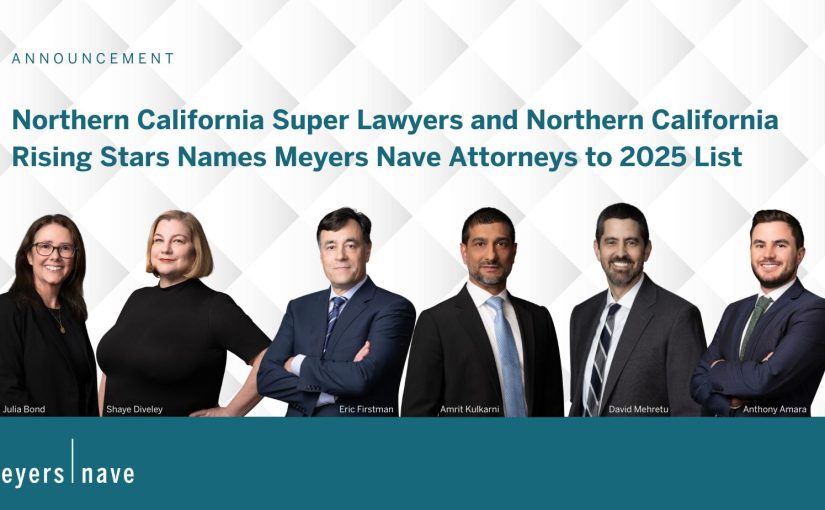
Meyers Nave Attorneys Named to 2025 Northern California Super Lawyers and Rising Stars Lists

We’re proud to announce that several attorneys from Meyers Nave have been recognized on the 2025 Northern California Super Lawyers and Rising Stars lists – honors that celebrate excellence, peer recognition, and professional achievement in the legal field.

This year’s honorees include:

Super Lawyers honors no more than five percent of attorneys in Northern California, while Rising Stars recognizes no more than 2.5% of early-career lawyers who show outstanding promise. The selection process includes independent research, peer nominations, and peer evaluations.

Congratulations to our talented team on this well-deserved recognition and for consistently delivering exceptional legal counsel to our clients.

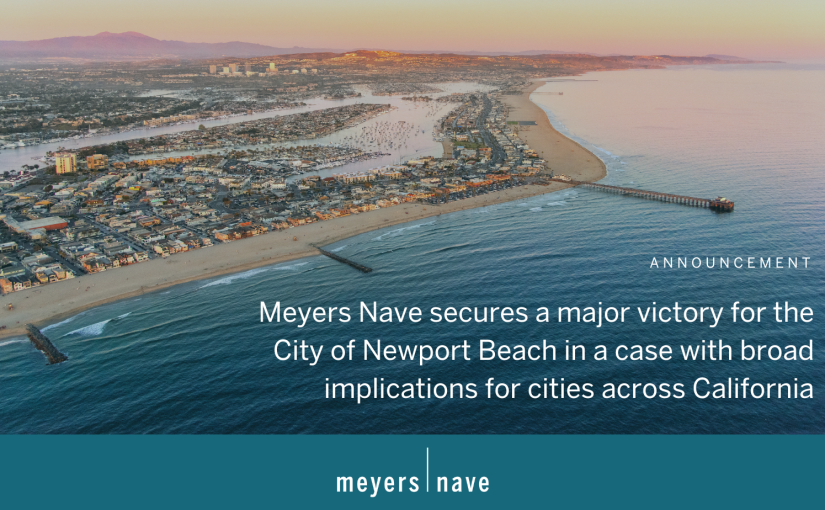
A Massive Win for Newport Beach—and for Every City Caught Between State Mandates and Local Rules

Meyers Nave is proud to have secured a significant legal victory for the City of Newport Beach in a case with broad implications for cities across California. Petitioners challenged the City’s implementation of its state-mandated Housing Element, arguing it violated the city charter by bypassing a voter approval requirement. The court, however, ruled in favor of the City, holding that state housing law preempts local procedures when they conflict with compliance obligations.

 Why This Matters

Cities throughout California are under intense pressure to meet strict housing targets set by Sacramento. When local rules stand in the way, the consequences are serious—ranging from costly delays and substantial fines to potential state intervention. This case answers a pivotal legal question:

Can a city implement its Housing Element without triggering a local voter approval measure?

Yes. The court’s decision affirms that cities must comply with state housing laws without being blocked by conflicting local measures. For Newport Beach, the ruling protects the city’s ability to maintain compliance with state housing laws. More broadly, it gives cities across the state a clearer legal path to meet their housing obligations without fear of legal setbacks.

Recently, California Attorney General Rob Bonta and Governor Gavin Newsom, who filed a joint amicus brief supporting Newport Beach, along with California Department of Housing and Community Development (HCD) Director Gustavo Velasquez, issued their own press release celebrating this decision as a massive win for Newport Beach and cities statewide working to solve California’s housing crisis.

We’re proud to help our clients solve complex legal challenges under real-world pressure. Cases like this matter—not just because the stakes are high, but because the outcomes define what cities are empowered to do. Wins like this result from experience, strategy, and teamwork.

Russell Morse Named a Top Real Estate & Development Lawyer by the Daily Journal

Congratulations to Russell Morse, Principal at Meyers Nave, for being named one of the Top Real Estate & Development Lawyers by the Daily Journal!

This well-deserved recognition is a testament to Russell’s deep expertise, strategic thinking, and tireless dedication to clients and the real estate community. His work continues to shape the landscape of development across the region, and we’re proud to see his impact acknowledged on this notable list.

Congratulations again, Russell!

Court Reaffirms CPRA Enforcement Limited to Named Requesters, Not Classes

In a recently published decision, the Second District Court of Appeal in Desolina Di Lauro v. City of Burbank, held that a plaintiff could not maintain a class action under the California Public Records Act (CPRA). The plaintiff, who had allegedly requested past utility bills through a city website and did not receive a response, filed a CPRA lawsuit against the City on her behalf and similarly situated class members. Key points from the decision:

1. CPRA does not permit class claims.
The Court of Appeal confirmed the CPRA does not allow class actions, even with sufficient allegations for an individual CPRA claim.

2. Judicial relief under CPRA is limited to individual who made the records request.
The CPRA restricts judicial relief only to the individual or entity that are named on the submitted records request, and only if the agency improperly withholds records. (Gov. Code § 7923.000.) This confirms that only individuals or entities named in a records request may pursue CPRA claims, provided they can show the agency failed to adequately respond.

3. No CPRA Relief for Unnamed Parties.
The Court held extending CPRA relief to non-named parties does not enhance public access, as the law is meant to determine whether a specific requestor is entitled to records.

Lessons Learned: This ruling highlights the importance of best practices for both citizens and agencies under the CPRA, especially when it comes to requests submitted through websites. Agency websites should make it clear how citizens can make CPRA requests, and agencies need to systematically monitor websites for any requests to ensure timely responses. Individuals and entities should take care to identify themselves in CPRA requests so that they can maintain the right to enforce the CPRA in court as needed. This is especially important as many agencies permit individuals to submit anonymous requests online—often to protect privacy—but such anonymity can preclude the requester from having standing to seek judicial relief.

Have Questions?
We are here to assist you in navigating this evolving landscape and understanding the impact of this opinion on your operations. Contact us for further guidance or to discuss specific implications for your business, organization, or agency.


10 Things California Non-Profit Employers Need to Know

1. Non-Profits Are Not Exempt from Employment Laws.
Just because your organization is mission-driven doesn’t mean you’re exempt from California’s strict labor laws. Wage and hour rules, discrimination laws, and workplace safety requirements still apply. These can also include federal and state compliance laws that may require alignment.

2. Employee Misclassification Can Be Costly.
Misclassifying workers—whether as independent contractors or exempt employees—can lead to significant penalties. Volunteers and interns can also pose a risk. If an intern performs work similar to an employee, they may be entitled to wages and benefits under state law, despite the classification.

3. Handbooks & Policies Should Be Updated Annually.
California laws change frequently. Having an outdated handbook—or not having one at all—can create legal risks. Key policies include at-will employment, anti-harassment, and wage and hour compliance, and most recently, social media and Artificial Intelligence policies. Additionally, ensure proper classification, payroll compliance, workplace postings, and required trainings are up to date.

4. Changes in Funding and Staffing Models Can Affect Policies.
Many non-profits are considering reduction-in-force (layoffs, furloughs), or examining how to restructure staffing, alter hiring practices, and adjust benefits provided to align with anticipated funding changes. When contemplating these changes, you need to be sure to adhere to state and federal requirements and provide employees with notice of upcoming changes.

5. Performance Management and Discipline.
Progressive discipline is a useful tool for employees and employers. Employers need to ensure practices are in place to effectuate discipline without jeopardizing the at-will status of employees. Appropriately documenting performance issues is key to mitigating legal risks.

6. California’s Leave Laws Are Complex.
California has some of the most generous leave laws in the country, including CFRA, FMLA, paid sick leave, and pregnancy disability leave. Know which apply to your organization based on entity, size, and structure.

7. Wage & Hour Violations Are Common Pitfalls.
Non-profits may rely on salaried employees who can work long hours, but failing to pay overtime or provide proper meal and rest breaks to eligible employees can result in costly claims.

8. Harassment Prevention Training is Mandatory.
In California, all employers—including non-profits—with five or more employees must provide harassment prevention training every two years. Compliance is good for your culture and non-compliance can be costly.

9. Board Members Can Have Employment Liability.
Non-profit board members oversee operations, but if they participate in hiring, firing, or policy enforcement, they can also be held personally liable for employment law violations of the entity. Don’t forget to also spell out conflicts of interest to staff.

10. Arbitration Can Limit Employer Liability.
Utilizing a well-drafted arbitration agreement for all employees can help limit damages should an employee sue your organization.

Meyers Nave partners with California non-profits to ensure compliance with evolving employment laws. We assist with employee classification, wage and hour compliance, workplace policies, required trainings, internal investigations, and dispute resolution. Our team helps organizations proactively mitigate risk by drafting and updating employee handbooks, implementing arbitration agreements, and ensuring policies align with current legal requirements. When disputes arise, we provide strong legal advocacy in litigation. Stay ahead of legal challenges—contact us to ensure your organization is protected and prepared.

Ninth Circuit Rules on Caste as a Protected Class in CSU’s Anti-Discrimination Policy

On March 12, 2025, the Ninth Circuit issued its decision in Kumar v. Koester, dismissing a constitutional challenge to a university’s anti-discrimination policy that added “caste” as a protected class.

Effective January 1, 2022, California State University’s Policy Prohibiting Discrimination, Harassment, Sexual Misconduct, Sexual Exploitation, Dating Violence, Domestic Violence, Stalking, and Retaliation was amended to include caste as a protected category. It defined “Nationality Race or Ethnicity” to include “color, caste, or ancestry,” but did not explicitly define “caste.” Two Hindu professors sued, arguing that the policy violated their constitutional rights under the Due Process Clause and the Religious Clauses of the First Amendment. The district court dismissed the Due Process claim for lack of standing and ruled in favor of CSU on the religious claims.

On appeal, the Ninth Circuit affirmed the lower court’s ruling on Due Process grounds and vacated the decision on the religious claims, finding the plaintiffs lacked standing to assert them.

  • Due Process Claim: The court found no sufficient injury because the plaintiffs did not claim an intention to engage in religious practices that could be considered caste discrimination or harassment under the policy. Instead, they explicitly stated that they “abhorred” the caste system and intended to comply with the policy. The court also rejected their argument that self-censorship constituted a legal injury, as they failed to show a credible threat of enforcement against them.
  • Religious Clause Claims: The Free Exercise claim failed because the plaintiffs did not demonstrate that the policy interfered with their ability to practice their religion. Their claim was based solely on offense at the perceived association of Hinduism with caste discrimination. The Establishment Clause claim also failed, as the plaintiffs did not show that the policy was hostile toward religion or caused them a “spiritual injury.” Without an actual injury, the court ruled they had no standing.

The Court drew on various sources to define “caste”, referring to it as an “expansive term referring to social hierarchies that exist across the world in many religions and societies…” The Court also noted that “caste” is not exclusively a religious concept, relying on Supreme Court precedent often discussing caste as a social, but not a religious concept.  This ruling is significant in the ongoing debate over caste protections in anti-discrimination laws. While the court did not rule on the constitutionality of caste as a protected class, the case underscores the importance of proper standing in future legal challenges. Employers in California should stay informed about developments in this area and ensure compliance with evolving legal standards in workplace policies and practices.

Should you have questions about inclusion and diversity in recruitment, retention and employment please contact Camille Hamilton Pating, Janice Brown, or Nadia Bermudez.

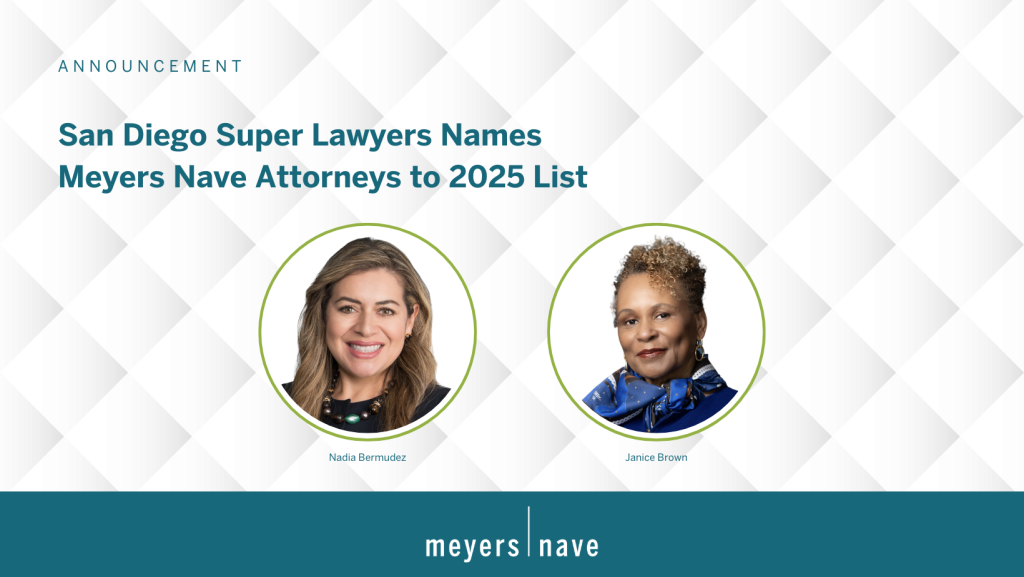
San Diego Super Lawyers Names Meyers Nave Attorneys to 2025 List

Congratulations to our exceptional team of attorneys at Meyers Nave who have been named to the 2025 San Diego Super Lawyers list!

The Meyers Nave lawyers ranked include:
Nadia Bermudez – Employment Litigation
Janice Brown – Employment Litigation

Only up to five percent of the lawyers in California are named to the Super Lawyers list. Super Lawyers is a rating service of outstanding lawyers from more than 70 practice areas who have attained a high degree of peer recognition and professional achievement. The selection process includes independent research, peer nominations and peer evaluations.

We are proud to have these talented attorneys on our team, delivering top-tier legal counsel to our clients.

Court of Appeal Publishes First Opinion Addressing Assembly Bill 52, Concluding City Failed to Meaningfully Consult with Tribe

Assembly Bill 52 (AB 52) requires public agencies to consult with tribes during the California Environmental Quality Act (CEQA) process. On March 14, 2025, in Koi Nation of Northern California v. City of Clearlake, the First District Court of Appeal filed the first published opinion addressing AB 52, concluding the City of Clearlake (City) failed to comply with CEQA’s tribal consultation requirements. Consequently, the Court set aside the City’s approval of a four-story hotel and road extension and the accompanying mitigated negative declaration (MND).

The opinion highlights the need for CEQA lead agencies to (1) pay careful attention to the affiliation of tribal representatives speaking on behalf of a tribe, including keeping track of intergovernmental agreements between tribes, if applicable; and (2) clearly document in the administrative record all efforts to consult and “seek agreement” on mitigation measures proposed by a tribe before deeming consultation complete.

City’s Coordination and Consultation Efforts

In January 2022, pursuant to City Guidelines, the City initiated informal “Native American coordination” by informing Koi Nation Tribal Councilmember Mr. Dino Beltran of the project and requesting information about the cultural significance of the project area to Koi Nation. Mr. Beltran identified a Koi Nation ancestor’s property and residence in the project area. At Mr. Beltran’s request, the City determined that the ancestor’s property was located 0.2 miles south of the project, and promised Koi Nation it would “proceed with caution” given this proximity.

In February 2022, Mr. Beltran informed the City Manager of the Intergovernmental Agreement between Koi Nation and another tribe, the Habematolel Pomo of Upper Lake, to assist Koi Nation to “protect the ancestors in the Southeastern Clearlake region.” Mr. Beltran identified Mr. Robert Geary, Tribal Historic Preservation Officer for the Habematolel Pomo of Upper Lake, as Koi Nation’s representative for AB 52 consultation. The City then sent Mr. Geary formal notification of Koi Nation’s opportunity to consult on the project pursuant to AB 52. Mr. Geary timely responded, requesting formal consultation and asking the City for detailed project information and the latest cultural resources study. Mr. Geary’s response, sent on Habematolel Pomo Cultural Resources letterhead, did not explicitly state it was made on behalf of Koi Nation.

A consultation meeting took place soon thereafter, at which, Mr. Geary stated, he provided the City with a treatment protocol to be used if resources were found and a monitoring agreement for cultural monitors during project development. He was told adoption of these measures was contingent on City Manager approval.

Following the meeting, Mr. Geary sent a letter stating, “the Tribe has concerns that the project could impact known cultural resources.” He requested the City (1) retain cultural monitors during development and all ground disturbance activities pursuant to a monitoring agreement; (2) incorporate Habematolel Pomo of Upper Lake’s Treatment Protocol as a mitigation measure; and (3) provide cultural sensitivity training for pre-project personnel on the first day of construction. The City did not respond to either Mr. Geary’s letter or his subsequent request for an update on the monitoring agreements, and did not communicate further with Mr. Geary or Koi Nation until the Notice of Intent to adopt the MND was circulated seven months later.

The Draft MND stated that no tribal cultural resources had been discovered at the project site. It did identify mitigation measures to reduce impacts to “unknown tribal cultural resources” that had “the potential to be uncovered during ground-disturbing activities.” These measures included only one of the three measures requested by Mr. Geary on behalf of Koi Nation. The MND recognized Koi Nation’s ancestral ties to the project area and summarized the initial informal coordination with Koi Nation. The MND stated the City sent AB 52 letters to “local tribes” and that the “Habem[a]to[l]el tribe requested consultation which occurred in March 2022.”

Koi Nation did not comment on the Draft MND during the public review period.

Following approval of the project and adoption of the MND by the City Planning Commission, Koi Nation appealed to the City Council. Members of Koi Nation and its attorneys addressed the City Council and asked the City to adopt appropriate mitigation and finish AB 52 consultation. The City Council denied the appeal.

Trial and Appellate Court Proceedings

Koi Nation filed a petition for writ of mandate, challenging the approval. The trial court denied Koi Nation’s petition, finding “nothing in the record constituted a written request from Koi Nation to invoke the right to consultation on the project” under AB 52 and that Koi Nation could not challenge a consultation that did occur. Koi Nation appealed. The Attorney General filed amicus curiae briefs in support of the Koi Nation. The League of California Cities and California State Association of Counties filed an amicus brief in support of the City.

The Court of Appeal sided with Koi Nation. The Court was unpersuaded by the City’s argument that “no reasonable person would agree” that Mr. Geary’s letter responding to the City’s formal notification of the opportunity for Koi Nation to consult on the project constituted a written request by Koi Nation. Nor did the Court agree with the City that it “should not be required to keep track of intergovernmental agreements or guess as to ‘who a representative is speaking for when receiving a consultation request.’” In the Court’s view, the record showed Mr. Geary’s response complied with CEQA’s requirement “that a tribe’s response be in writing, be timely, and request consultation.” Though perhaps “less than ideally clear, [] in context it suffices.”

Next, the Court of Appeal determined the “sparse” record lacked sufficient evidence to conclude that the consultation met statutory requirements for meaningful consultation, which must include “seeking, discussing, and considering carefully the views of others” and “where feasible, seeking agreement.” (See Govt. Code, § 65352.4.) Nor did the record include evidence to support the City’s claims that consultation could “permissibly cease” under Public Resources Code section 21080.3.2, subdivision (b). The court found the consultation “perfunctory at best” and concluded that “[i]n the absence of any discussion about the City’s reasoning or conclusions, there was no real opportunity for Koi Nation and the City to seek mutual agreement as the statute contemplates.”

Key Takeaways:

  • An agency’s failure to comply with the consultation requirement under AB 52 constitutes a prejudicial abuse of discretion requiring setting aside the agency’s environmental review and project approvals.
  • Consultation must be “meaningful.” To accomplish this, there must be discussion between the agency and the tribe regarding the agency’s reasoning for granting or denying any requested mitigation measures. The agency should inform the tribe of its decision directly, and not merely publish it in the CEQA document. If agreement is infeasible due to an impasse between the agency and tribe, the agency should document that impasse in the record.
  • The record should reflect the agency’s consideration of the consulting tribes’ recommendations regarding tribal cultural resources, and their value and significance to the tribes. The record should demonstrate the agency made a “reasonable effort” to reach a mutual agreement with a consulting tribe before determining consultation has concluded. A tribe’s submission of information to an agency outside the consultation process does not relieve an agency of its responsibility to conduct consultation under AB 52, “or the need for the agency to show whether or how the consultation affected the agency’s decision.”
  • When tribal consultation has concluded, an agency should provide notice to the consulting tribe(s) indicating it considers consultation “concluded” pursuant to PRC Section 21080.3.2(b) and outlining the agency’s reasoning.

Governor Newsom’s Emergency Proclamation Fast-Tracks Wildfire Prevention Projects

On March 1, Governor Newsom proclaimed a state of emergency to expedite critical fuels reduction projects to address “catastrophic wildfire risks created by forest conditions across the state.”

The Governor’s proclamation would suspend state rules and regulations, including CEQA and the California Coastal Act, to the extent necessary to expedite critical fuels reduction projects.

Critical Fuels Reduction Projects

Eligible critical fuels reduction projects must include, as their primary objective, at least one of the following activities:

  1. Removal of hazardous, dead, and/or dying trees;
  2. Removal of vegetation:
  • For strategic fuel breaks identified in approved fire prevention plans;
  • For community defensible space;
  • Along roadways, highways and freeways to create safer evacuation routes and reduce roadside ignitions;
  • Using cultural traditional ecological knowledge (TEK) and/or prescribed burns;
  • To maintain existing fuel breaks or fuel modification projects

Requirements

The proclamation contains additional measures to ensure that streamlined projects balance expedited fuels reduction with environmental protection, including requirements that:

  1. The Secretary of CalEPA or Secretary of the California Natural Resources Agency (CNRA) must first determine whether a proposed project would be eligible for streamlining, based on whether the project would accelerate critical fuels reduction projects while protecting public health and the environment.
  2. Projects must be carried out in accordance with the State Environmental Protection Plan, or a comparable plan describing how the project would achieve that balance.
  3. The Board of Forestry and Fire Protection must take immediate steps to update the California Vegetation Treatment Program Environmental Impact Report, in consultation with CNRA and the public, to continue promoting expedited review for large wildfire risk reduction treatments.

For more information, a copy of the Governor’s proclamation can be found here. Please also visit our website for key points from the Governor’s related Executive Order issued January 12, 2025 here.